
Search results for @a
that are a tweet
See all the search results for this query
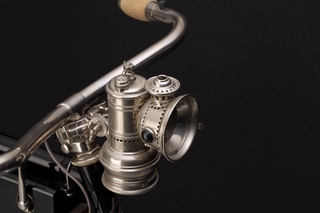
A broken handlebar at top speed caused one damaging crash, and Wyman steered his motorcycle with a hardwood stick lashed across the handlebars for the next 400 miles until the bike was repaired.
This tweet was posted on March 05, 2021.
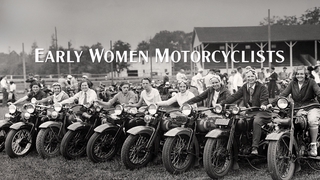
Happy #InternationalWomensDay! Adventure lovers, gear up for a spin through our newest photography exhibition, Early Women Motorcyclists, which is on view post-security in Terminal 3: https://t.co/wQpJEn2ky5
This tweet was posted on March 08, 2021.
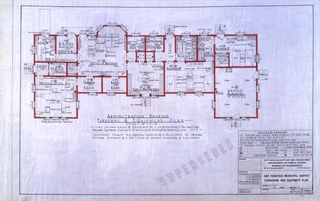
Measuring 34 feet by 88 feet, the Administration Building at Mills Field was considered a temporary structure, built at a cost of $8,566, and wasn’t yet complete when the air port was officially dedicated on May 7, 1927.
This tweet was posted on March 09, 2021.
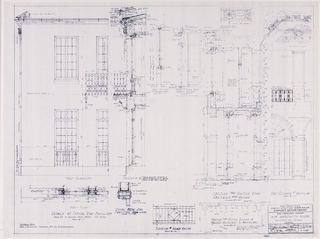
The woodwork was oak, the countertops were of Belgian black marble travertine, and the floor was patterned in a four-color terrazzo. #SFOHistory
This tweet was posted on March 23, 2021.
Want to learn more about George Wyman and his epic adventure? Check out The George A. Wyman Memorial Project, where you can even download a rider's guide to his grand tour: https://t.co/vddbMIpwYU
This tweet was posted on March 05, 2021.
📸:
George A. Wyman at the end of his transcontinental ride July 1903
The Motorcycle Magazine November 1903 | New York
Courtesy of The George Wyman Memorial Project
California Motor Bicycle, 1902
California Motor Company, Inc., San Francisco
Courtesy of Dave Scoffone
This tweet was posted on March 05, 2021.
@darryl_ramm You know, that’s a little bit of a mystery to us as well. It's most likely that the rooms were used by pilots, particularly airmail pilots, in need of an overnight crash pad.
This tweet was posted on March 10, 2021.
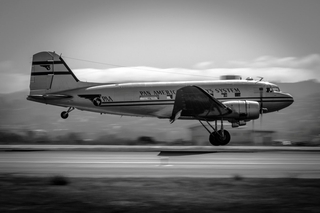
By 1940, nearly three million passengers had flown in DC-3s, and the aircraft had collectively logged over 100 million miles. By the end of production, more than 10,000 commercial and military transport versions had been built, and a few are still flown today. #WingWednesday
This tweet was posted on March 10, 2021.

In Japan, Takeshi Terauchi (b. 1939) and Yūzō Kayama (b. 1937) sparked a craze for electric guitar music known as Eleki. #InstrumentalSurf
This tweet was posted on March 12, 2021.
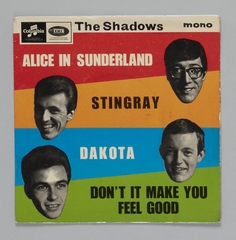
Like their counterparts in the United States, international instrumental bands in the late 1950s and 1960s were influenced by rhythm and blues and rock ‘n’ roll. The Shadows, a group of teenagers from London, led the European instrumental charge. #InstrumentalSurf
This tweet was posted on March 12, 2021.
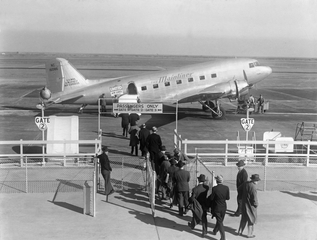
The DC-3 proved aerodynamically superior to other planes, highly reliable, safe, easy to maintain, and for the first time, enabled carriers to make a profit from passenger services. More than four hundred DC-3s were initially ordered by most major airlines. #WingWednesday
This tweet was posted on March 10, 2021.
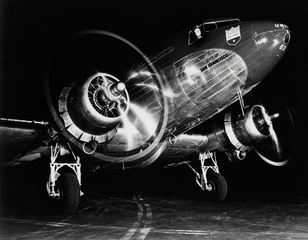
The Douglas DC-3 was arguably the most significant commercial airliner introduced prior to WWII. Introduced in 1936, it incorporated many advancements, including a strong, streamlined, all-aluminum, semi-monocoque fuselage, and a low-drag wing design. #WingWednesday #avgeek
This tweet was posted on March 10, 2021.
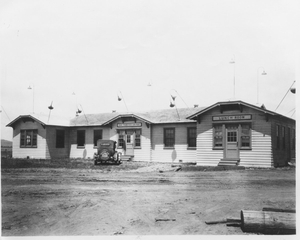
We had a request recently for some #TerminalTuesday posts, and where better to start than at the beginning?
*Technically*, the first structure at Mills Field wasn’t referred to as a “terminal,” but rather an “Administration Building.”
This tweet was posted on March 09, 2021.
📸:
DC-3, late 1930s
Gift of United Airlines Archives
1999.047.231 a
@flySFO, DC-3, 1938
SFO Museum Collection
1997.52.050
DC-3 cutaway, late 1930s
Gift of the family of Raymond B. Klinke, Sr.
2019.080.074
DC-3, 2014
Photo by & Gift of Alexis Esguerra
2014.138.002
This tweet was posted on March 10, 2021.
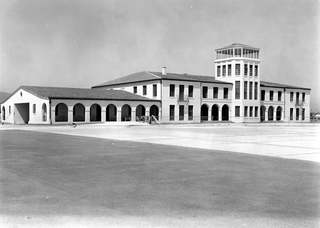
As the commercial aviation industry grew in the early 1930s, it became apparent that San Francisco Airport needed to enlarge and enhance their passenger facilities. Construction began in 1936 for a new administration building. #SFOHistory
This tweet was posted on March 16, 2021.
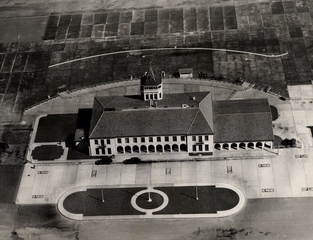
Designed in a modernized Spanish Revival style, the new Administration Building measured 88 feet by 206 feet and was sited where the 1927 building stood. #SFOHistory
This tweet was posted on March 16, 2021.
📸:
Marjorie S. Joyner styles a model’s hair during a demonstration c. 1951
Madam C. J. Walker Collection, @IndianaHistory
R2020.0410.070
This tweet was posted on February 22, 2021.
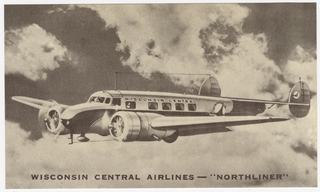
149 of the Lockheed Model 10 Electras were built in a variety of variants, the most famous arguably being the modified Model 10E flown by Amelia Earhart on her ill-fated attempted around-the-world flight. #WingWednesday #avgeek
This tweet was posted on February 24, 2021.
@DevinMcCutchen It was never a part of our collection - it belonged to the Airport. Our collections scope doesn’t allow for *actual* planes. While we’re sad to see it go, we’re sure it will find a good home.
This tweet was posted on March 03, 2021.
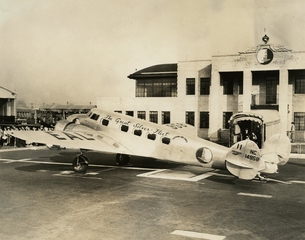
Named after a star in the Pleiades cluster, the Electra's sleek appearance is punctuated by its signature twin tail, which became a hallmark of Lockheed design. #WingWednesday #avgeek
This tweet was posted on February 24, 2021.
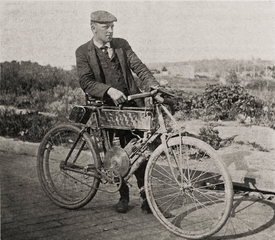
EPIC STORY ALERT! George A. Wyman (1877–1959) was the first person to cross the U.S. by motorized vehicle. This was an exceptional feat at the turn of the 20th century, as gasoline was not readily available and passable roads did not exist in many parts of the country.
This tweet was posted on March 05, 2021.
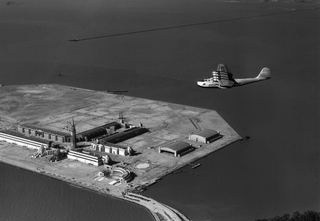
The Martin Model 130 also had a very large fuel capacity, which gave it a range of over 3,000 miles. Only three were built: the China Clipper, Philippine Clipper, and Hawaii Clipper. #WingWednesday #AvGeek
This tweet was posted on March 03, 2021.
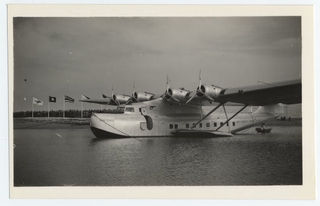
The Martin Model 130 flying boat was designed to meet #PanAm's requirements for a long-range, transoceanic aircraft to cross the expanse of the Pacific. It had a clean, aerodynamic design and was equipped with “sea wings” for buoyancy, instead of sponsons. #WingWednesday #AvGeek
This tweet was posted on March 03, 2021.
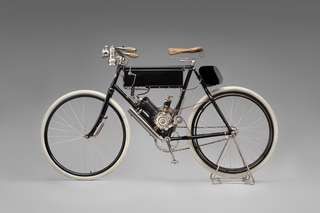
Undaunted, Wyman departed for his transcontinental journey atop a specially modified California motorcycle on May 16, 1903, from Lotta’s Fountain at the corner of Market, Geary, and Kearny Streets in downtown San Francisco.
This tweet was posted on March 05, 2021.
We're VERY excited to present our first-ever virtual tour! Grab a front row seat for a visit to #HairStyle, led by the exhibition's curator, Nicole Mullen. https://t.co/icsoxop7ZE
This tweet was posted on March 04, 2021.
📸:
Pan American Airways, Martin M-130 "China Clipper," Alameda, 1935
Gift of Beatrice H. Springer
1995.35.27 a
"China Clipper," Treasure Island, 1938
Gift of Reid W. Dennis
2010.244.002
"Hawaii Clipper," 1935
Gift of the Captain John B. Russell Family
2012.149.0902
This tweet was posted on March 03, 2021.
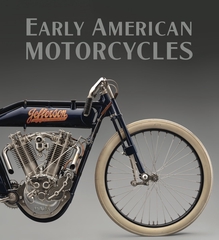
New exhibition alert! Early American Motorcycles reflect a bygone era of mechanical innovation and bold industrial design. Presented are 14 exceptional examples made prior to 1916 along with a collection of rare engines and photos from the pioneering era of motorcycling.
This tweet was posted on February 12, 2021.
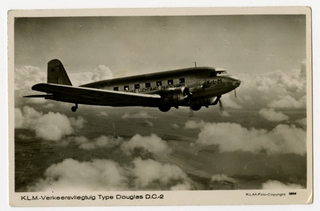
The DC-2 could carry 14 passengers, and proved a safe, reliable, and comfortable airliner with a maximum speed of 210 mph. Fewer than 200 were built, as its successor, the DC-3, one of the most successful airliners ever, was introduced the following year. #WingWednesday #avgeek
This tweet was posted on February 10, 2021.

Wigs and hair pieces, often made from real human hair, allowed women to create a temporary new look—instantly changing their hair color and style. Products, such as the Eva Gabor synthetic wig spray, were created to cater to this trend. #HairStyle
This tweet was posted on February 11, 2021.

“No longer a fad or high fashion fantasy for the privileged few, the wig and the hairpiece are here to stay,” wrote Dorothea Zack Hanle in the 1964 publication Hairdo Handbook. #HairStyle
This tweet was posted on February 11, 2021.
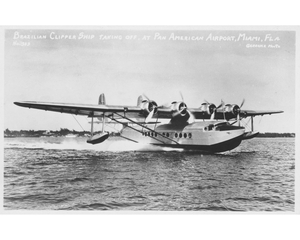
The Brazilian Clipper NC-822M was the first S-42 to enter service in 1934. It primarily flew #PanAm’s Latin American routes. Later upgraded versions included the S-42A and S-42B, which were equipped with more powerful engines and had a range of up to 2,800 miles. #WingWednesday
This tweet was posted on February 17, 2021.
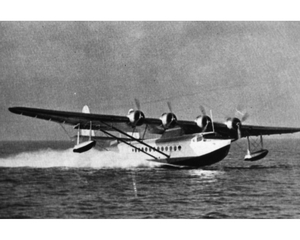
The Sikorsky S-42 was developed to meet requirements of #PanAm president Juan Trippe for a large, long-range, trans-oceanic flying boat. Designed by Igor Sikorsky, with input from Charles Lindbergh, it could carry a crew of 4 and 32 passengers up to 1,200 miles. #WingWednesday
This tweet was posted on February 17, 2021.
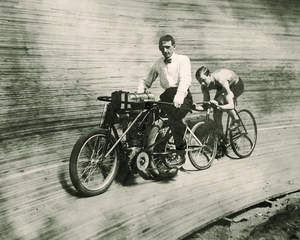
The evolution of motorcycling dates to the bicycling craze of the late-1800s. Bicycle racers found they could pedal with less effort in the slipstream created behind another racer, a "pacer," and then use their reserve energy to pass that rider. #EarlyAmericanMotorcycles
This tweet was posted on February 16, 2021.
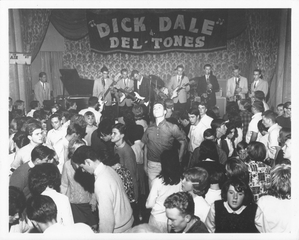
“The style of music I developed, to me at the time, was the feeling I got when I was out there eating it on the waves. It was that good rambling feeling I got when I was locked in a tube with white water caving in over my head.” —#DickDale #InstrumentalSurf
This tweet was posted on February 18, 2021.
📸:
Motor-pacer and cyclist at Six Days race, Madison Square Garden 1898
Courtesy of Don Emde @donemde
R2020.2307.002
Charles Henshaw and Oscar Hedstrom on a Hedstrom Motor-Pacer c. 1901
Courtesy of Lyman & Merrie Wood Museum of Springfield History @SpfldMuseums
R2020.2309.001
This tweet was posted on February 16, 2021.
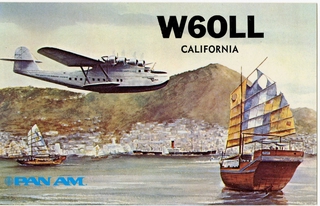
Bay Area local Eugene Leach (1919-2000) spent his teenage years watching the planes take off and land at Oakland Airport and operating a ham radio. The hobbies merged in a career as a radio operator for #PanAm.
This tweet was posted on January 29, 2021.