
Search results for @a
that are a tweet
See all the search results for this query

Surf music was welcomed amidst the punk, garage, and new wave movements of the 1980s in such diverse venues as Knott’s Berry Farm, the punk-rock-haven Madame Wong’s West, and the historic Whisky A Go-Go. #InstrumentalSurf
This tweet was posted on April 15, 2021.
📸 2/2:
Pan American World Airways, Lockheed L-049; c. 1946
Gift of M.D. Klaas
2018.112.0671
TWA (Trans World Airlines), Lockheed L-049; c. 1950
Gift of Charles Loomis
2005.062.012 a
lighter: Lockheed L-049; late 1940s
Gift of Thomas G. Dragges
2003.065.108
This tweet was posted on April 14, 2021.
📸:
Jon and the Nightriders 7" EP
California Records | Riverside, CA
Fender Jaguar 1965
Fender 6G15 Reverb 1962
played/used by John Blair of Jon & The Nightriders
Recorded Live At Hollywood’s Famous Whisky A Go-Go 1980
Voxx Records | Los Angeles
All: Courtesy of John Blair
This tweet was posted on April 15, 2021.
Allan's friend Mike Curb produced films & enlisted him to provide music for his soundtracks. Allan’s revolutionary “Blues Theme” featured a “fuzz” distortion guitar effect & was used in the opening scene of Curb’s 1966 motorcycle film The Wild Angels. 🎶👂 https://t.co/JH8GSnQYz0
This tweet was posted on April 05, 2021.
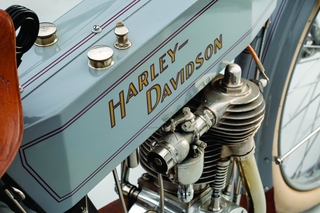
Although they built just three more of their simple, single-cylinder motorcycles the following year, Harley-Davidson moved to a new building on the company’s current Juneau Avenue site and increased production to fifty motorcycles in 1906. #EarlyAmericanMotorcycles
This tweet was posted on April 02, 2021.
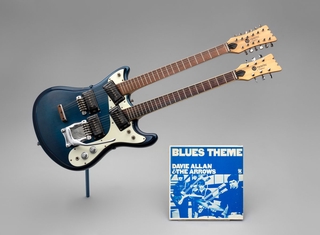
Davie Allan is an instrumental rock guitarist who enjoyed popular success in the mid- to late-1960s, even as demand for surf music and instrumentals waned. As a teen, he was inspired by Duane Eddy’s distinctive tone and emphasis on the lower notes of the guitar. #InstrumentalSurf
This tweet was posted on April 05, 2021.
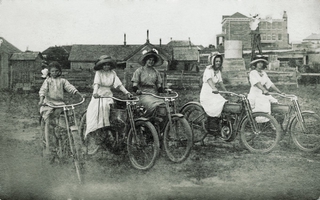
In 1910, Harley-Davidson moved into a modern 9,520 square-foot production facility, and by 1913 they produced more than sixty motorcycles per day. #EarlyAmericanMotorcycles
This tweet was posted on April 02, 2021.
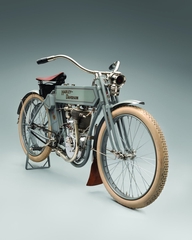
The 1910 Harley-Davidson Model 6 on display features an optional carbide headlamp, which is lit by flammable acetylene gas that is produced by a reaction between carbide pellets and water in the base of the lamp. #EarlyAmericanMotorcycles
This tweet was posted on April 02, 2021.
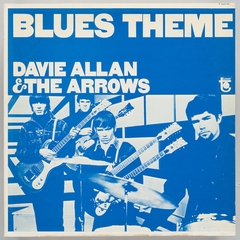
The hit song was developed into the Blues Theme album, which showcased a unique style created by Allan that mimicked motorcycle sounds with extensive fuzz distortion and tremolo-bar bending on the lower notes of his guitar. #InstrumentalSurf
This tweet was posted on April 05, 2021.
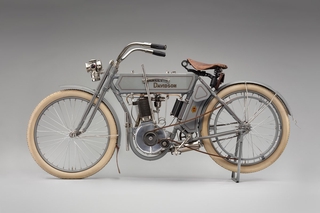
William S. Harley, along with brothers Arthur, Walter, and William Davidson constructed the first three Harley-Davidson motorcycles in 1903 in a small workshop located in the backyard of the Davidson family home in Milwaukee, WI. #EarlyAmericanMotorcycles
This tweet was posted on April 02, 2021.
📸:
Madam C. J. Walker in front of her home and business; c. 1912
Indianapolis, IN
Madam C. J. Walker product line; c. 1918
Madam C. J. Walker and Booker T. Washington at a YMCA opening; 1913
Indianapolis, IN
All are courtesy of @IndianaHistory's Madam C. J. Walker Collection
This tweet was posted on April 01, 2021.
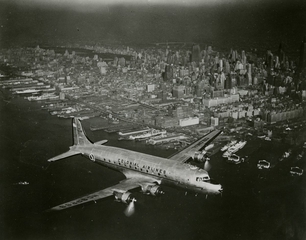
Deemed too complicated and expensive to operate, its design was changed to a smaller, unpressurized airliner with a single tail, which became the DC-4. #WingWednesday #AvGeek
This tweet was posted on April 07, 2021.
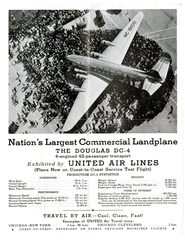
In the late 1930s, United Air Lines asked Douglas Aircraft to develop a large-capacity, long-range, pressurized, four-engine airliner. The DC-4E featured a tripletail and a nose wheel, then unique to large passenger aircraft, and first flew in 1938. #WingWednesday #avgeek
This tweet was posted on April 07, 2021.
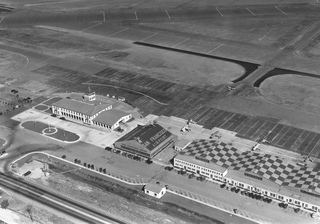
The field lighting control building was originally located across a parking lot from Hangar No. 2 (at bottom, center of historic image). By the time it was torn down, it was just west of the end of runway 28L. #SFOHistory
This tweet was posted on April 06, 2021.
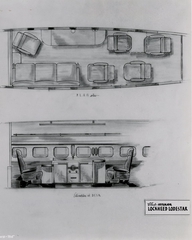
Most sales of the Lodestar were to foreign airlines or to the U.S. military, as improving air strength was a priority leading up to World War II. After the war, many were converted into private or executive aircraft with a sleek, club-style interior. #WingWednesday
This tweet was posted on March 24, 2021.

The first wave of instrumental surf music captivated young people all across the United States. Surf music was loud and dynamic, driven by Fender guitars played through the company’s new Reverb unit, which produced a watery, echo-like effect. #InstrumentalSurf
This tweet was posted on March 26, 2021.
📸 pt. 2:
chandelier; May 1, 1937
1997.52.078.025
architectural drawing: Architectural Details; March 23, 1936
1997.52.025.05.02
interior, staircase; July 15, 1937
1997.52.078.017
interior, lobby, Dec. 24, 1937
1997.52.078.018 a
This tweet was posted on March 23, 2021.
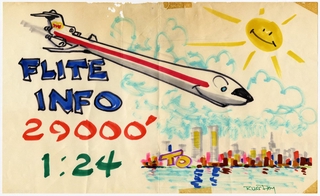
Colorful hand-made #TWA cabin welcome signs not only identified the crew and communicated other essential information to passengers as they came onboard, but they conveyed something far more memorable: a sense of hospitality, character, and trust. #AvGeek
This tweet was posted on March 30, 2021.
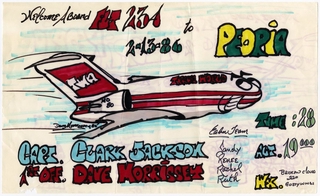
From every personal snapshot, video clip, and diary entry of an airline employee emerges a series of experiences supporting the broader story of commercial aviation. These unique perspectives can offer an alternative take on the official account of an airline. #AvGeek
This tweet was posted on March 30, 2021.
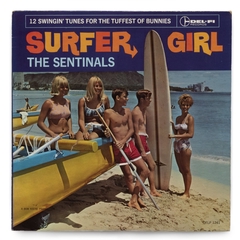
Hundreds of instrumental surf bands pressed a multitude of records, producing both regional and national hits. Album cover artwork and graphic design reflected California’s surfing culture and is a colorful reminder of the 1960s surf music scene. #InstrumentalSurf
This tweet was posted on March 26, 2021.
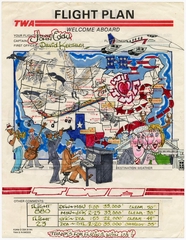
Read more about these drawings and how they continue to uphold the enduring legacy of #TWA's team of dedicated professionals in a new blog post: https://t.co/nB7AgHlCPl
#AvGeek
This tweet was posted on March 30, 2021.
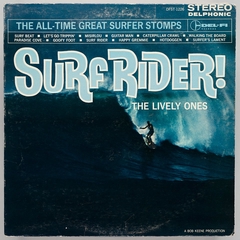
Surf groups backed their lead and rhythm guitar parts with a melodic bassline and a powerful rhythm section, sometimes with a saxophone included for additional intensity. #InstrumentalSurf
This tweet was posted on March 26, 2021.
The films take us from a celebration of Native American culture in the American Southwest to a walk through a Slovakian streetscape, and from the passion of a Haitian-born street dancer to an animated meditation on the potential for a romantic connection. https://t.co/L4nkcbBQBp
This tweet was posted on March 29, 2021.
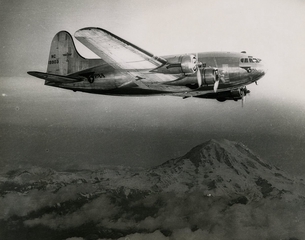
In 1934, Boeing began design studies for a four-engine bomber in conjunction with a four-engine civil airliner. The bomber version became the B-17 and was produced in large numbers. The civil airliner version emerged as the Model 307. #WingWednesday
This tweet was posted on March 31, 2021.
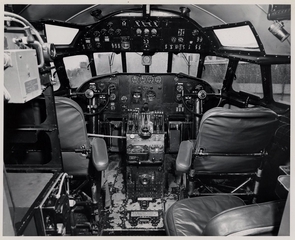
Named the “Stratoliner” for its ability to fly near the stratosphere, it had a circular cross-section and a tear-drop fuselage to handle pressurization. Only ten were produced: a prototype, three for Pan Am, five for TWA, and one for Howard Hughes. #WingWednesday
This tweet was posted on March 31, 2021.
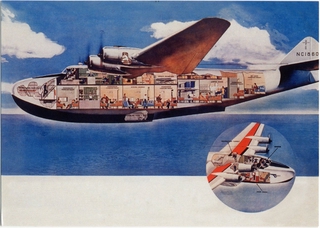
The largest and most luxurious of all of the flying boats, the Boeing 314 was called a flying hotel by journalists of the day. #WingWednesday #avgeek
This tweet was posted on March 17, 2021.
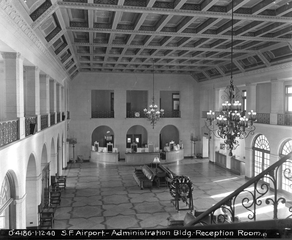
The new building included a 4-story control tower, meteorological observation platform, and weather department offices, in addition to a spacious passenger waiting room and numerous amenities. It was dedicated and opened to the public on October 24, 1937. #SFOHistory
This tweet was posted on March 16, 2021.
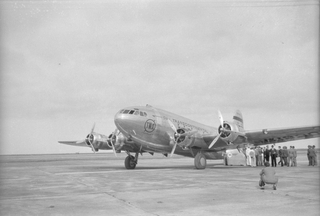
These days, it's common for planes to cruise at altitudes of 35,000 feet. But back in 1940, when the first pressurized commercial airliner, the Boeing 307 Stratoliner, was introduced, it was a marvel to fly above most weather disturbances at 20,000 feet. #WingWednesday
This tweet was posted on March 31, 2021.
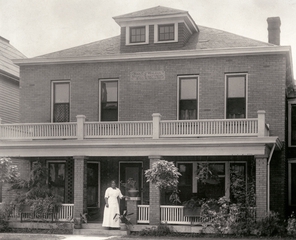
“I am a woman who came from the cotton fields of the South...and from there I promoted myself into the business of manufacturing hair goods and preparations. I have built my own factory on my own ground!”
—Madam C. J. Walker addressing the National Negro Business League, 1912
This tweet was posted on April 01, 2021.
📸 1/2:
TWA (Transcontinental & Western Air) Stratoliners at San Francisco Airport; early 1940s and 1946
Gifts of and photos by Charles Loomis
2005.062.008 a, 2005.062.011 a
Pan Am Stratoliner over Mt. Rainier; early 1940s
Gift of M.D. Klaas
2018.112.0658 a b
This tweet was posted on March 31, 2021.
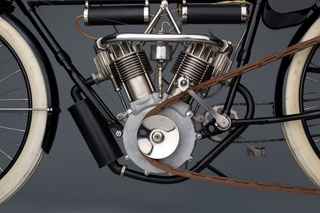
Amazingly, Curtiss clocked 136 miles-per-hour—the fastest speed anyone had achieved on a motorized vehicle—on the hard-packed sand before the motorcycle’s driveshaft broke while traveling over ninety miles-per-hour on the return run. #EarlyAmericanMotorcycles
This tweet was posted on March 19, 2021.
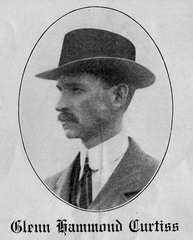
Before Glenn Curtiss (1878-1930) turned to aviation, he was one of the first to design motorcycles that significantly improved on their bicycle heritage. An avid cyclist and racer, he ran a small manufacturing and retail shop in NY in the late 1890s. #EarlyAmericanMotorcycles
This tweet was posted on March 19, 2021.
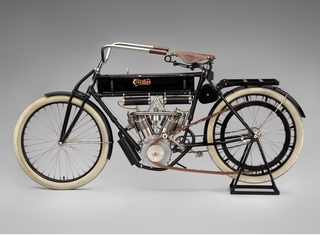
He soon dropped the Hercules name in favor of Curtiss and in January 1907, he entered a modified racing motorcycle fitted with the new V-8 aircraft engine at the Winter Speed Carnival in Ormond Beach, Florida. #EarlyAmericanMotorcycles
This tweet was posted on March 19, 2021.
In 1902, he advertised single-cylinder motorcycles, engines, and casting kits under the brand Hercules, and the next year he was winning races on a powerful new twin-cylinder machine. In 1904, Curtiss made a twin-cylinder Hercules capable of an impressive 5 to 50 miles-per-hour.
This tweet was posted on March 19, 2021.
San Francisco artist Dana Hemenway spoke with us during the fabrication and installation of her work, The Color of Horizons, which is a suspended lighted sculpture located at the southern end of Harvey Milk Terminal 1. https://t.co/JQXoUCDEqP
#WomensHistoryMonth
This tweet was posted on March 18, 2021.

While sitting in the salon (perhaps for the first time in over a year) have you ever wondered how blowout styling started? Rose Evansky (1922-2016), a Polish Jew who fled to Britain from Nazi Germany, pioneered it in the early 1960s in London. #HairStyle
This tweet was posted on March 22, 2021.