
Search results for avgeek
that are a tweet
See all the search results for this query
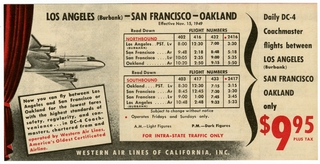
With its long range and capacity of up to eighty-six passengers, the DC-4 was crucial to advancing trans-ocean commercial aviation in the immediate postwar era. #WingWednesday #AvGeek
This tweet was posted on April 07, 2021.
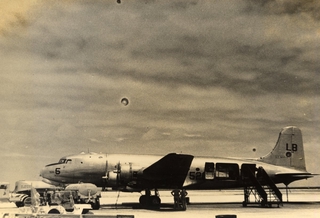
World War II circumvented the DC-4's civilian use, and most were appropriated for use as C-54 Skymaster military transports. After the war, Douglas converted many to airliners and continued production until 1947. #WingWednesday #AvGeek
This tweet was posted on April 07, 2021.

Colorful hand-made #TWA cabin welcome signs not only identified the crew and communicated other essential information to passengers as they came onboard, but they conveyed something far more memorable: a sense of hospitality, character, and trust. #AvGeek
This tweet was posted on March 30, 2021.
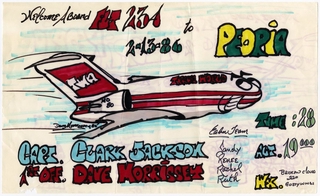
From every personal snapshot, video clip, and diary entry of an airline employee emerges a series of experiences supporting the broader story of commercial aviation. These unique perspectives can offer an alternative take on the official account of an airline. #AvGeek
This tweet was posted on March 30, 2021.
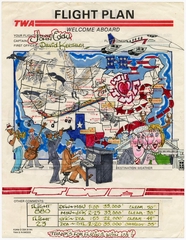
Read more about these drawings and how they continue to uphold the enduring legacy of #TWA's team of dedicated professionals in a new blog post: https://t.co/nB7AgHlCPl
#AvGeek
This tweet was posted on March 30, 2021.
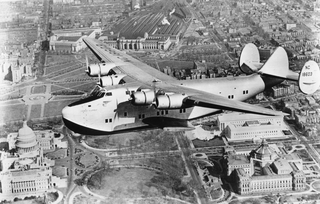
The B-314 was introduced to Pan Am's Pacific Division and used to open its Atlantic service in 1939. Here, the Yankee Clipper is shown over Washington D.C. and the Empire State Building. #WingWednesday #avgeek #PanAm
This tweet was posted on March 17, 2021.
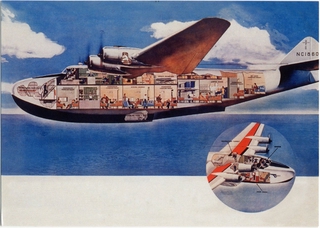
The largest and most luxurious of all of the flying boats, the Boeing 314 was called a flying hotel by journalists of the day. #WingWednesday #avgeek
This tweet was posted on March 17, 2021.
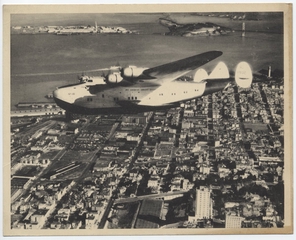
Designed by Wellwood E. Beall, it distinguished itself by shear size, three vertical stabilizers in the tail, and cantilevered seawings that doubled as fuel tanks. #WingWednesday #avgeek #PanAm
This tweet was posted on March 17, 2021.
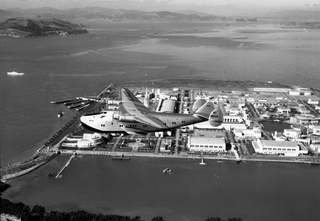
Pan American Airways ordered six of the original version and six more 314A variants, three of which were sold before delivery to the British Overseas Airways Corporation (BOAC). #WingWednesday #avgeek
This tweet was posted on March 17, 2021.
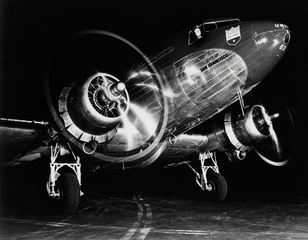
The Douglas DC-3 was arguably the most significant commercial airliner introduced prior to WWII. Introduced in 1936, it incorporated many advancements, including a strong, streamlined, all-aluminum, semi-monocoque fuselage, and a low-drag wing design. #WingWednesday #avgeek
This tweet was posted on March 10, 2021.
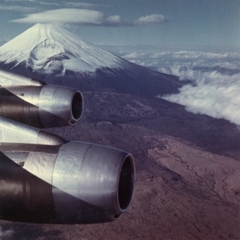
Publicity photo perfection.
📸:
photograph: JAL (Japan Air Lines), Douglas DC-8, early 1960s
Gift of Thomas G. Dragges
2010.039.001.012
#avgeek #JapanAirLines #MtFuji #windowseat
This tweet was posted on February 23, 2021.
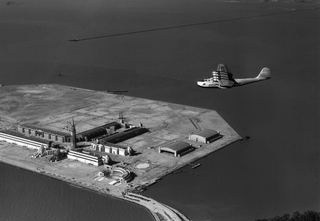
The Martin Model 130 also had a very large fuel capacity, which gave it a range of over 3,000 miles. Only three were built: the China Clipper, Philippine Clipper, and Hawaii Clipper. #WingWednesday #AvGeek
This tweet was posted on March 03, 2021.
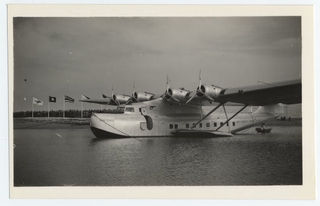
The Martin Model 130 flying boat was designed to meet #PanAm's requirements for a long-range, transoceanic aircraft to cross the expanse of the Pacific. It had a clean, aerodynamic design and was equipped with “sea wings” for buoyancy, instead of sponsons. #WingWednesday #AvGeek
This tweet was posted on March 03, 2021.
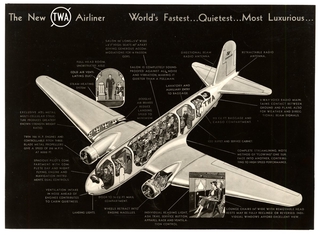
As rival United Air Lines had exclusive rights to the Boeing 247, TWA (Transcontinental & Western Air) turned to Douglas Aircraft to develop an improved competitor. The Douglas DC-2 was developed in the early 1930s and introduced in 1934. #WingWednesday #avgeek
This tweet was posted on February 10, 2021.
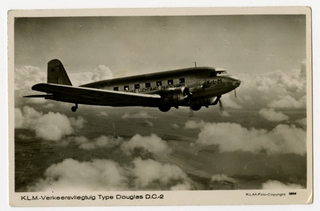
The DC-2 could carry 14 passengers, and proved a safe, reliable, and comfortable airliner with a maximum speed of 210 mph. Fewer than 200 were built, as its successor, the DC-3, one of the most successful airliners ever, was introduced the following year. #WingWednesday #avgeek
This tweet was posted on February 10, 2021.
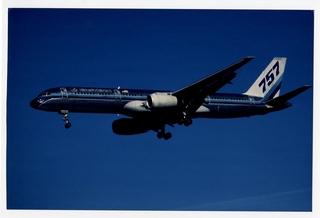
#OTD in 1982, the Boeing 757 took its first flight. Designed to be more fuel efficient than its predecessor, the trijet 727, the twinjet 757 was used by airlines around the world on short- to medium-range flights. Over 1,000 of the aircraft were built. #AvGeek
This tweet was posted on February 19, 2021.
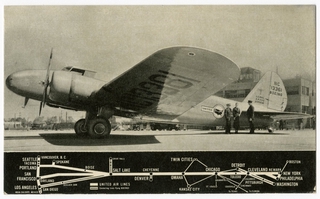
Seventy-five of the Boeing 247 were built, with most going to United Air Lines’ fleet and operating on its "Mainline" transcontinental route. #WingWednesday #avgeek
This tweet was posted on February 03, 2021.
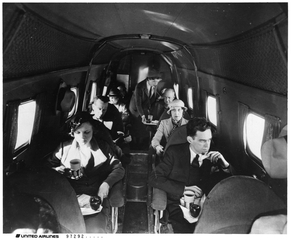
Advanced for its time, the Boeing 247 accommodated only ten passengers, which made it less economical to operate than larger capacity airliners, particularly the more fuel-efficient, fourteen-seat Douglas DC-2, introduced a year later in 1934. #WingWednesday #avgeek
This tweet was posted on February 03, 2021.
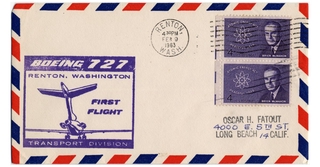
The first flight of the Boeing 727 was #OnThisDay in 1963. The medium range and capacity of the 727 made it suitable for shorter flights and for regional airports with short runways. #OTD #avgeek
This tweet was posted on February 09, 2021.
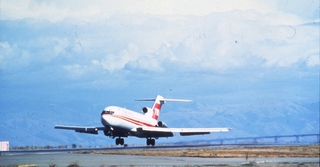
The only tri-jet developed by Boeing, the 727 also had a uniquely located door and air stair that allowed passengers to exit from the back of the aircraft. #avgeek
This tweet was posted on February 09, 2021.
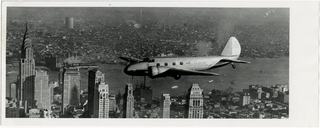
The twin-engine Boeing 247 was a revolutionary airliner when it entered into service with United Air Lines in 1933. Often hailed as the first modern airliner, it featured advancements like wing flaps, autopilot, and semi-retractable landing gear. #WingWednesday #avgeek
This tweet was posted on February 03, 2021.
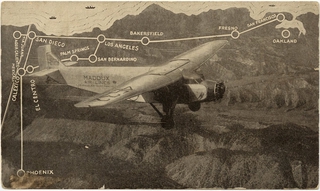
The all-metal Ford Tri-Motor, or “Tin Goose,” had a huge impact on commercial aviation in the late 1920s and 199 were produced. Shown here is a 4-AT Tri-Motor from Maddux Air Lines, a short-lived airline from the late 1920s based out of southern California. #WingWednesday #avgeek
This tweet was posted on January 20, 2021.
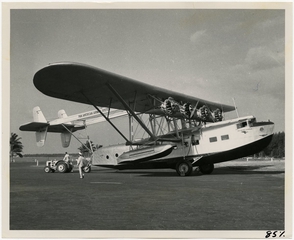
Although the Sikorsky S-40 served #PanAm well through the 1930s, it was often derided for its lack of aerodynamic efficiency due to its many struts and support wires. Charles Lindbergh famously referred to the aircraft as a “flying forest.” #WingWednesday #AvGeek
This tweet was posted on January 27, 2021.
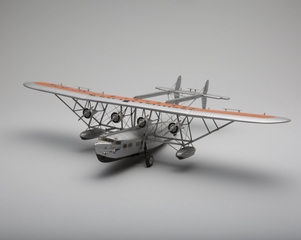
Only three Sikorsky S-40 were built, and these were the first to be named “Clipper Ships.” #PanAm introduced the aircraft in 1931, piloted by Charles A. Lindbergh on its Miami–Barranquilla route. #WingWednesday #AvGeek
This tweet was posted on January 27, 2021.
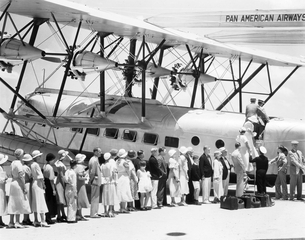
The Sikorsky S-40 was developed in response to requests from #PanAm president Juan T. Trippe for a high-capacity flying boat. With a cabin capable of carrying 38 passengers, it was nearly double the capacity of the airline’s next largest flying boat. #WingWednesday #AvGeek
This tweet was posted on January 27, 2021.
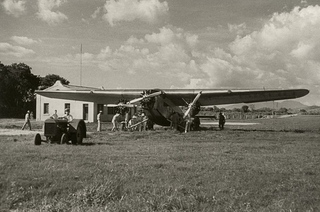
As the world grows more and more interconnected, can you imagine what it was like to fly around the world in the 1930s, when the aviation industry was just in its infancy? #avgeek #MuseumFromHome
This tweet was posted on January 12, 2021.
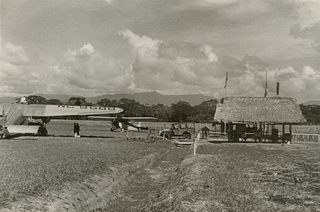
Pan American Airways’ public relations and advertising manager Daniel Rochford photographed the company’s routes through Central America, documenting the fledgling airlines’ foray into countries with marginal aviation infrastructure.
#avgeek #MuseumFromHome
This tweet was posted on January 12, 2021.
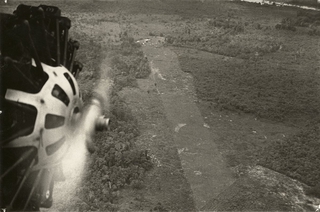
See “Pan American Airways in Central America” online at: https://t.co/cMoTZAe4Q1 #avgeek #MuseumFromHome
This tweet was posted on January 12, 2021.
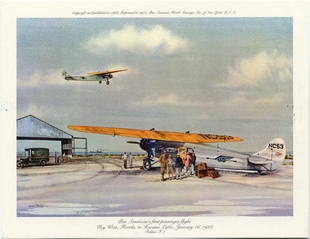
Introduced in 1925 and first operated by the Dutch airline KLM (Royal Dutch Airlines), the F.VII and its variants, the F.VIIa, F.VIIa/3m and F.VIIb/3m, were used in many pioneering and record-breaking flights around the world. #WingWednesday #avgeek
This tweet was posted on January 13, 2021.
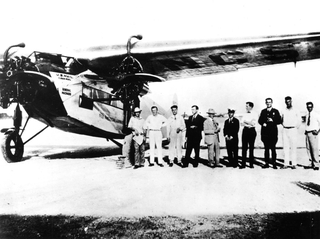
With a maximum speed of 130 mph, a cruising speed of just over 100mph, and a capacity of 8 passengers, the Fokker F.VII/3m trimotor was a groundbreaking aircraft of the late 1920s. #WingWednesday #avgeek
This tweet was posted on January 13, 2021.
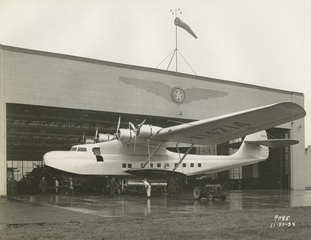
#OnThisDay in 1934, the Martin M-130 took its first test flight in Baltimore, Maryland. The largest commercial airplane at the time, the "China Clipper" inaugurated transpacific service to Asia with Pan American Airways. #avgeek #aviationhistory #MuseumFromHome
This tweet was posted on December 30, 2020.

Happy New Year from SFO Museum! As 2020 winds down, what are your wishes for 2021?
TranStar Airlines brochure
c. 1986
SFO Museum Collection
Gift of David Winckoski
2011.195.075
#avgeek #MuseumFromHome
This tweet was posted on December 31, 2020.
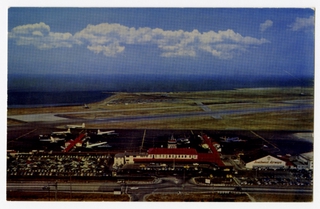
Each airport around the world is assigned a three-letter @IATA (International Air Transport Association) code to make them easily and quickly identifiable. San Francisco International Airport’s three letter code, SFO, first appeared in 1947. @flysfo #avgeek #MuseumFromHome
This tweet was posted on January 07, 2021.
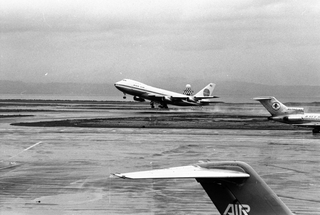
#OnThisDay in 1969, the first widebody jet landed @flySFO. Pan American World Airways brought its new Boeing 747 “jumbo jet” to SFO to advertise the new class of airliner. Have you ever flown on a Boeing 747? #avgeek #MuseumFromHome
This tweet was posted on December 21, 2020.
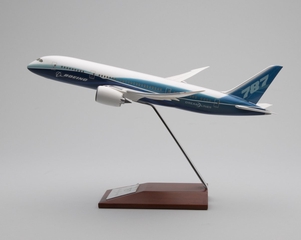
#Onthisday in 2009, the Boeing 787 took off on its maiden flight. Named the #Dreamliner, 69 airlines fly over 1,900 routes with 992 aircraft in service all over the world. Have you ever flown on a Boeing 787? #avgeek #MuseumFromHome
This tweet was posted on December 15, 2020.
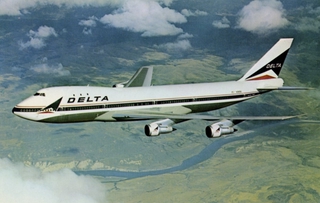
#Onthisday in 2017, Delta Air Lines’ last 747 took its final scheduled international flight from Seoul, South Korea, to Detroit. Did you ever fly on a #Delta Boeing 747? #avgeek #MuseumFromHome
This tweet was posted on December 18, 2020.