
Search results for avgeek
that are a tweet
See all the search results for this query
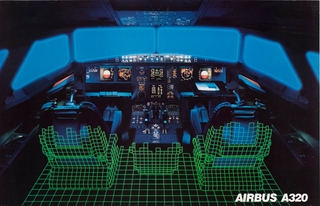
The medium- to short-haul, narrow-bodied aircraft have ranges of up to 4,315 miles and cruising speeds of around 515mph. The A320 family was the first to feature an entirely computerized glass cockpit and digital fly-by-wire flight control technology. #WingWenesday #AvGeek
This tweet was posted on October 13, 2021.
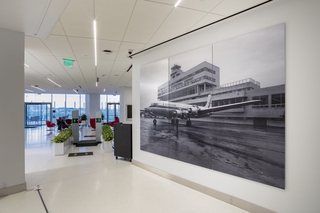
SFO has witnessed great strides in aviation. For close to a century, the airport reinvented itself numerous times. Looking out over the busy runways and terminals today, one can only imagine the lonely stretch of pastureland that predated SFO. #MillsFieldSFO #SFOHistory #AvGeek
This tweet was posted on October 18, 2021.
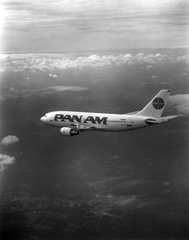
Based on the earlier A300, the Airbus A310 had a shortened fuselage with a redesigned wing and undercarriage. It also had a lower purchase price than other wide-body airliners and was designed to be more economical to operate. #WingWednesday #AvGeek
This tweet was posted on October 06, 2021.
RT @flySFO: Hello #AvGeeks! Do you need a cool new bag for your next trip? Enter to win one of these limited edition #SFO travel bags.
Ent…
This tweet was posted on October 06, 2021.
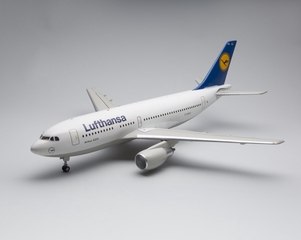
The Airbus A300 was the first wide-body airliner produced by Airbus Industrie, a European aerospace manufacturing consortium formed in 1970. Both the A300 and A310 established Airbus as a major European airliner manufacturer. #WingWednesday #AvGeek
This tweet was posted on October 06, 2021.
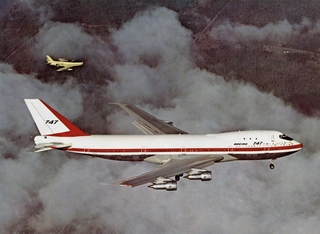
Boeing's purpose-built plant in Everett, Washington, is the largest building in the world by volume, with a total volume of 472,370,319 cubic feet, covering a floor area of 399,480 square meters (98.3 acres). Have you ever been to the Boeing assembly plant? #avgeek
This tweet was posted on September 30, 2021.
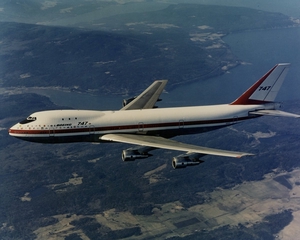
#OnThisDay in 1968, the first 747 rolled out of Boeing's Everett, Washington plant. The plant was completed in 1967, and within it, a large group of Boeing employees nicknamed "The Incredibles" built the first 747-100. #avgeek
This tweet was posted on September 30, 2021.
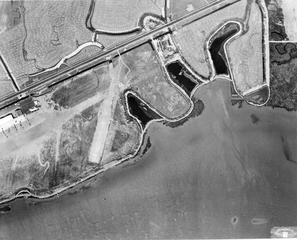
#OnThisDay in 1930, the City and County of San Francisco began to purchase the property of Mills Field, which would become @flySFO. #SFOHistory #avgeek
This tweet was posted on August 30, 2021.
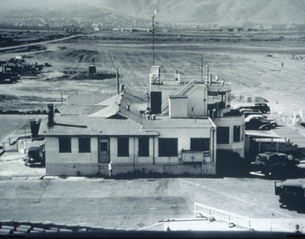
By 1930, weather studies confirmed that Mills Field was the best possible location for an airport, and San Francisco began a ten-year purchasing program with the Mills Estate to acquire 1,112 acres. #SFOHistory #avgeek
This tweet was posted on August 30, 2021.
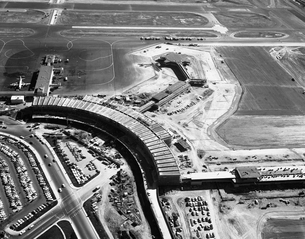
On September 15, 1963, the South Terminal (now Harvey Milk Terminal 1) was dedicated at San Francisco International Airport. This was the Airport's first major addition since the Central Terminal (now Terminal 2) was completed in 1954. #SFOHistory #SFHistory #avgeek
This tweet was posted on September 14, 2021.
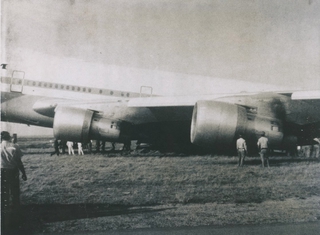
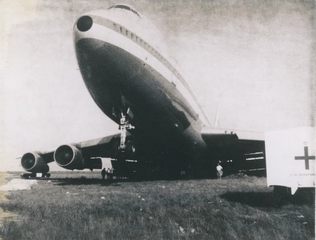
“There really wasn’t time to be scared. We were just too busy.”
Our newest #blog post describes. through the career documents of Flight Attendant Jane Thoe, the actions of the crew of #PanAm World Airways Flight 845 in the first major accident involving a Boeing 747. #avgeek
This tweet was posted on August 31, 2021.
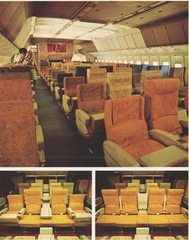
Airlines touted the L-1011’s twin aisle, wide-body passenger comforts, ease of operation, and reduced environmental impact. The galley was placed in the luggage compartment, and meals were brought up via elevators. #wingwednesday #avgeek
This tweet was posted on August 25, 2021.
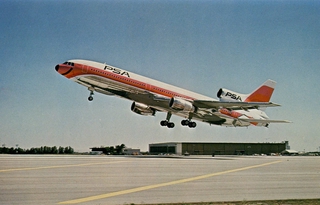
Despite its accolades, only 250 were ordered, well short of the projected 500. It was Lockheed’s first and only entry into the widebody airliner market. #wingwednesday #avgeek
This tweet was posted on August 25, 2021.
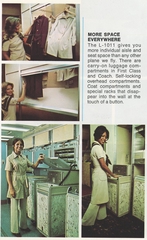
The coach section of the Lockheed L-1011 TriStar featured a full-service bar surrounded by small alcoves for socializing and was equipped with twin passenger seats that TWA claimed were the “finest coach seats in the world.” #wingwednesday #avgeek
This tweet was posted on August 25, 2021.
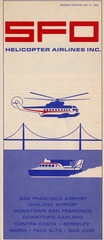
However, this trial run of a commercial hovercraft lasted about a year. Do you remember seeing these hovercrafts? #avgeek #SFOHistory #ThrowbackThursday
This tweet was posted on August 11, 2021.
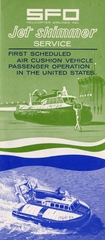
In 1965, SFO Helicopter Airlines, which operated local helicopter flights between San Francisco and Oakland, introduced a new Transbay route operated by a hovercraft. #avgeek #SFOHistory #ThrowbackThursday
This tweet was posted on August 11, 2021.
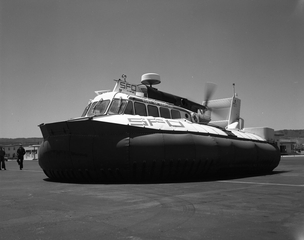
The Westland SRN-5 held 15 passengers and traveled at speeds up to 50 knots between Oakland International Airport, downtown San Francisco, and San Francisco International Airport. #avgeek #SFOHistory #ThrowbackThursday
This tweet was posted on August 11, 2021.
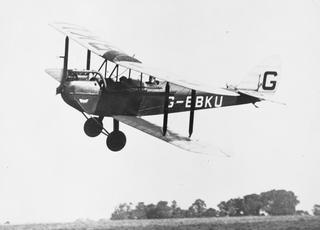
Over their 43 years in operation, the de Havilland Co. produced history-making aircraft such as the DH.60 Moth biplane, which Amy Johnson used to fly solo from England to Australia in 1930 & the DH.106 Comet, the world's first commercial jet airliner, introduced in 1952. #avgeek
This tweet was posted on July 27, 2021.
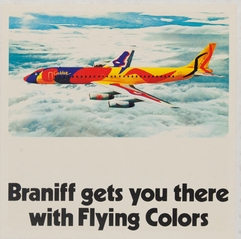
Artist Alexander Calder was born #onthisday in 1898. In the early 1970s, Calder was commissioned to paint several aircraft operated by #Braniff International Airways. #avgeek #AlexanderCalder
This tweet was posted on July 22, 2021.
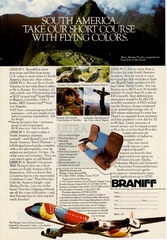
This Douglas DC-8-62, named Flying Colors of South America, entered service in 1973, on routes between the U.S. and premier South American destinations. Do you have a favorite airline livery? #avgeek #braniff #AlexanderCalder
This tweet was posted on July 22, 2021.
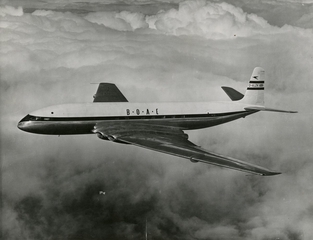
#Onthisday in 1882, Geoffrey de Havilland was born in Buckinghamshire, United Kingdom. He would go on to establish the de Havilland Aircraft Company in late 1920. #deHavilland #avgeek
This tweet was posted on July 27, 2021.
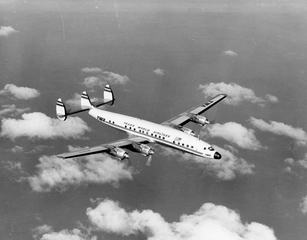
The L-1649 Starliner, the final variant in Lockheed’s Constellation-based design series, embodied the zenith in large-capacity, piston-engine airliner development, rivaled only by the Douglas DC-7C, with which it was designed to compete. #WingWednesday #avgeek
This tweet was posted on June 09, 2021.
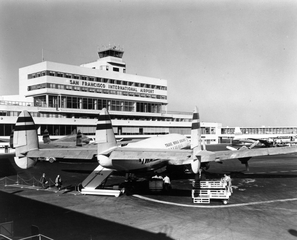
Introduced in 1951, the Lockheed L-1049 Super Constellation was an enhanced-range, stretched upgrade of the L-049 Constellation and was designed primarily to compete on transoceanic routes with the Douglas DC-6. #WingWednesday #avgeek
This tweet was posted on May 26, 2021.
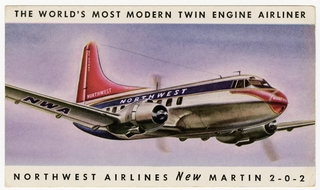
Developed by the Glenn L. Martin Company, the Martin 2-0-2 was intended to supersede the DC-3. Although early orders placed in 1945 were canceled due to production delays, the 2-0-2 was introduced into service by Northwest Airlines in October 1947. #WingWednesday #avgeek
This tweet was posted on April 28, 2021.
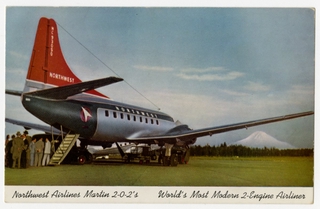
The unpressurized 2-0-2 had a capacity of 40 passengers and a maximum speed of 311 miles per hour, much faster than the DC-3. With a range of just over 600 miles, it was designed to compete with the Convair 240 on short domestic routes. #WingWednesday #avgeek
This tweet was posted on April 28, 2021.
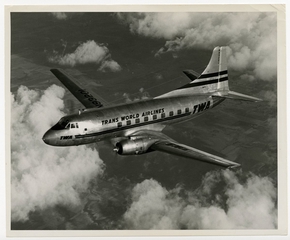
Though only 47 were built, the Martin 2-0-2 was flown by airlines such as Northwest Airlines, Pacific Air Lines, Trans World Airlines, and Allegheny Airlines. #WingWednesday #avgeek
This tweet was posted on April 28, 2021.
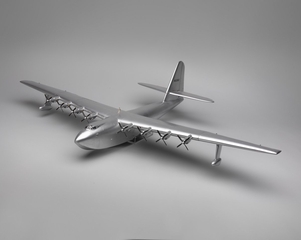
Despite the "spruce" nicknaming, the H-4 was actually constructed primarily of birch due to weight concerns and restrictions on the use of aluminum during WWII. Numerous delays prevented it from being completed before the end of the war. #WingWednesday #avgeek
This tweet was posted on May 05, 2021.
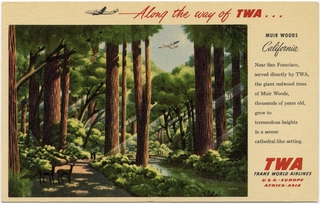
It's National Parks Week! The wonder, beauty, and magnificence of our country's national parks make them popular imagery in airline advertisements, even going back to the 1930s. #NationalParkWeek #AvGeek
This tweet was posted on April 20, 2021.
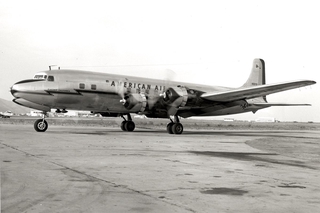
Introduced by United Air Lines and American Airlines in 1946, the DC-6 was the first new American-designed airliner to operate during the postwar years. #WingWednesday #avgeek
This tweet was posted on April 21, 2021.
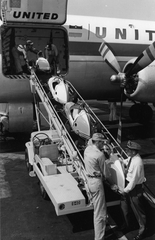
Later DC-6 variants had a longer fuselage, increased range, and higher weight capabilities, and include the DC-6A cargo-liner, the DC-6B passenger-liner, and the convertible cargo/passenger DC-6C. #WingWednesday #avgeek
This tweet was posted on April 21, 2021.
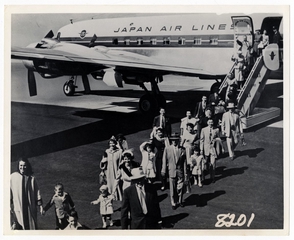
One of the most economical large propliners to operate during the postwar period and beyond, over 700 Douglas DC-6 were built and added to airline fleets worldwide. #WingWednesday #avgeek
This tweet was posted on April 21, 2021.
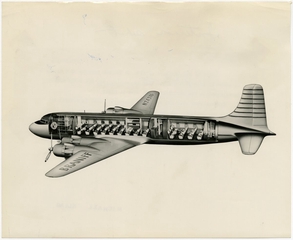
The passenger versions could feature luxuriously appointed cabin interiors with options for a lounge in the tail section and sleeper berth accommodations. #WingWednesday #avgeek
This tweet was posted on April 21, 2021.
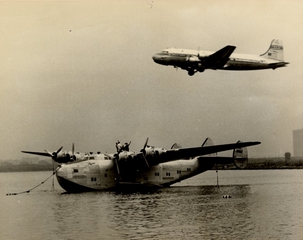
By late 1945, #PanAm realized the superiority of the DC-4 over the Boeing 314 flying boat and began to operate the airliner on both transpacific and transatlantic routes. #WingWednesday #avgeek
This tweet was posted on April 07, 2021.
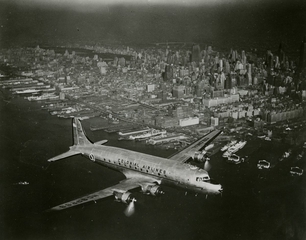
Deemed too complicated and expensive to operate, its design was changed to a smaller, unpressurized airliner with a single tail, which became the DC-4. #WingWednesday #AvGeek
This tweet was posted on April 07, 2021.
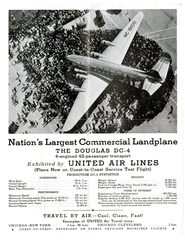
In the late 1930s, United Air Lines asked Douglas Aircraft to develop a large-capacity, long-range, pressurized, four-engine airliner. The DC-4E featured a tripletail and a nose wheel, then unique to large passenger aircraft, and first flew in 1938. #WingWednesday #avgeek
This tweet was posted on April 07, 2021.